
Everyone talks about setting goals for the new year, but only a small fraction actually see real progress. Here is something surprising. Research reveals that people who create specific personal development plans are 60 percent more likely to achieve their goals. Most people assume willpower is all it takes, yet the data shows a strategic plan makes the difference between wishful thinking and measurable success.
Table of Contents
- Understanding Personal Development Plans
- Step-By-Step Guide To Building Your Plan
- Personal Development Strategies For Organizations
- Tracking Progress And Measuring Results
Quick Summary
| Takeaway | Explanation |
|---|---|
| Establish a Personal Development Plan (PDP) | A PDP is a strategic roadmap for growth, including a self-assessment, goal definition, actionable steps, and periodic evaluations to facilitate continuous improvement. |
| Utilize SMART Goals for Clarity | Implementing the SMART framework ensures goals are Specific, Measurable, Attainable, Relevant, and Time-bound, transforming abstract aspirations into achievable objectives. |
| Regularly Track Progress | Establish effective measurement frameworks and use technology for progress tracking to maintain motivation, gain insights, and dynamically adjust development strategies. |
| Embrace Flexibility in Your PDP | Recognize that personal development is a continuous journey; periodically review and adapt your PDP to respond to changes in personal and professional landscapes. |
| Foster Organizational Support for Development | Organizations should create a culture of continuous learning, implement supportive frameworks, and leverage technology to enhance employee engagement and growth. |
Understanding Personal Development Plans
A Personal Development Plan (PDP) represents a strategic roadmap for individual growth and professional advancement. These comprehensive frameworks enable individuals to systematically assess their current skills, define clear objectives, and implement targeted strategies for continuous improvement.
The Core Components of a Personal Development Plan
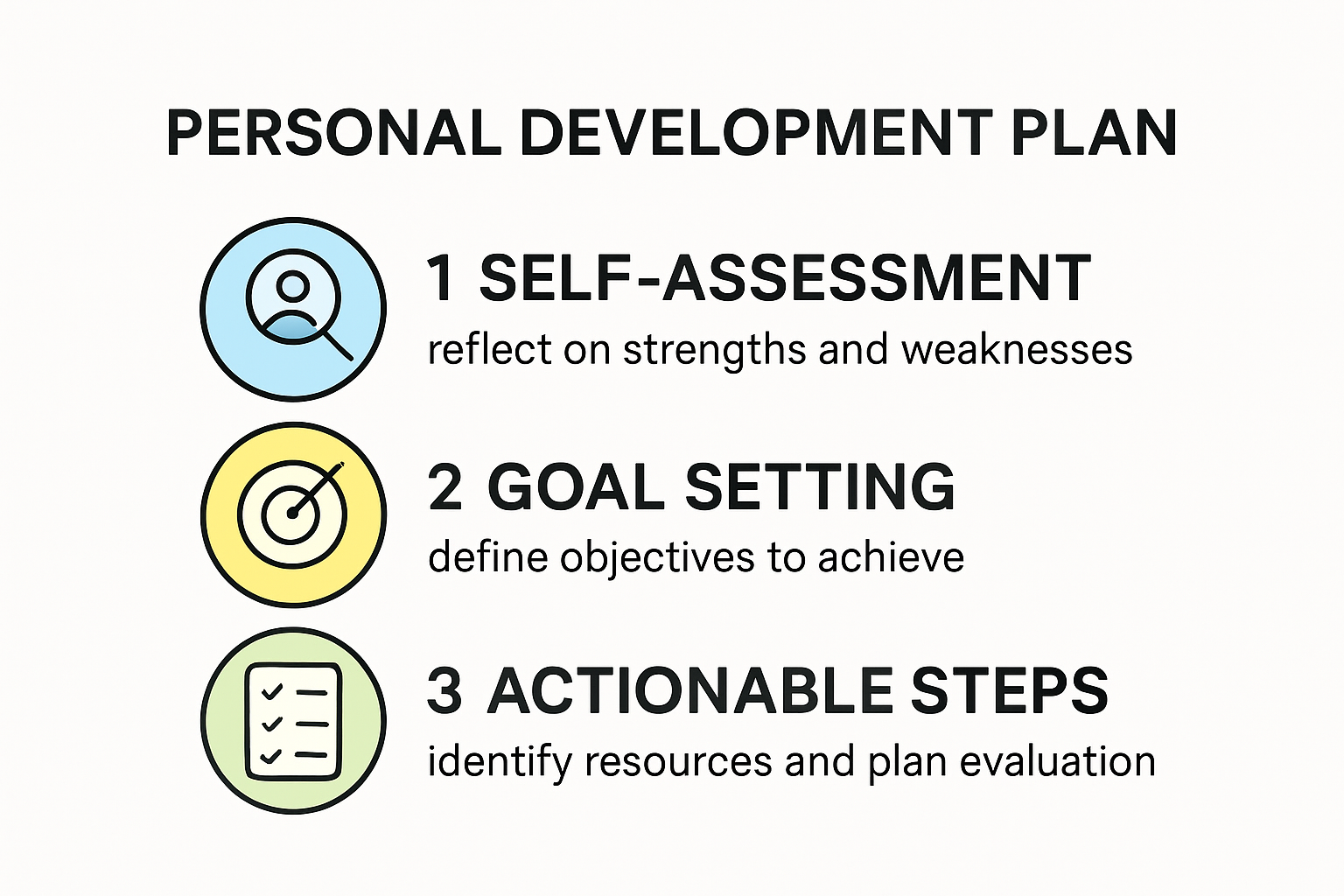
At its foundation, a Personal Development Plan is more than a simple list of goals. It is a dynamic document that captures an individual’s aspirations, potential, and deliberate pathway toward personal and professional transformation. According to research from Day Off App, a structured PDP typically includes several critical elements: comprehensive self-assessment, explicit goal definition, actionable steps, resource identification, and periodic evaluation mechanisms.
The significance of these plans cannot be overstated. Research indicates that individuals who establish specific goals are 60% more likely to achieve them. This statistic underscores the importance of creating a methodical approach to personal development rather than relying on sporadic or unfocused efforts.
Strategic Goal Setting and Implementation
Effective Personal Development Plans leverage frameworks like SMART criteria to transform abstract aspirations into concrete, achievable objectives. SMART goals are Specific, Measurable, Attainable, Relevant, and Time-bound. By applying this methodology, individuals can design a plan that is both ambitious and realistic.
For instance, instead of a vague goal like “improve professional skills,” a SMART goal would read: “Complete an advanced project management certification within the next 12 months by dedicating 5 hours weekly to study and allocating budget for the course.” This approach provides clear direction and measurable milestones.
Moreover, our guide on skills development emphasizes that personal development is not a static process but a continuous journey of learning and adaptation. The most successful PDPs remain flexible, allowing individuals to recalibrate their objectives in response to changing professional landscapes, emerging opportunities, and personal growth.
A comprehensive Personal Development Plan serves multiple strategic purposes. It acts as a personal accountability mechanism, provides clarity of purpose, helps track progress, and creates a structured approach to professional and personal evolution. By investing time in creating a thoughtful, well-structured PDP, individuals position themselves to make intentional, informed decisions about their growth trajectory.
Understanding that personal development is unique to each individual, PDPs should be deeply personalized. They must reflect an individual’s distinct strengths, address specific areas for improvement, and align with both short-term achievements and long-term career aspirations. The most effective plans are those crafted with genuine self-reflection, honest assessment, and a commitment to continuous learning and improvement.
Step-By-Step Guide to Building Your Plan
Creating a personal development plan requires a structured and intentional approach. This comprehensive guide will walk you through the essential steps to design a robust framework for your personal and professional growth.
Conducting a Comprehensive Self-Assessment
The foundation of any effective personal development plan begins with an honest and thorough self-assessment. According to experts from Edstellar, this initial step involves critically examining your current skills, strengths, weaknesses, and potential areas for improvement.
Start by gathering comprehensive data about your professional capabilities. This includes:
- Professional Skills Inventory your current technical and soft skills
- Performance Feedback Review recent performance evaluations, peer reviews, and supervisor comments
- Career Aspirations Reflect on your long-term career objectives and personal goals
Utilize multiple assessment tools to gain a holistic view. These might include personality assessments, skills gap analyses, and 360-degree feedback mechanisms. Research from AIHR suggests that comprehensive self-assessment helps align individual goals with broader organizational objectives.
Developing Actionable and Strategic Goals
Transforming your self-assessment insights into concrete goals requires precision and strategic thinking. Implement the SMART goal framework to ensure your objectives are specific, measurable, achievable, relevant, and time-bound.
Example of a well-constructed goal: “Improve digital marketing skills by completing two advanced certification courses in Google Analytics and Social Media Marketing by December 2025, dedicating 10 hours per month to learning and practical application.”
Key considerations when developing goals:
- Specificity Clearly define what you want to achieve
- Measurability Establish concrete metrics for tracking progress
- Realistic Timeline Set achievable deadlines that challenge but do not overwhelm you
Creating an Implementation and Tracking Strategy
A personal development plan is only as effective as its implementation. Design a robust tracking mechanism that allows for regular monitoring and adaptive adjustments. Our training development guide emphasizes the importance of creating a flexible framework that can evolve with your changing professional landscape.
Develop a detailed action plan that includes:
- Specific learning resources and training opportunities
- Financial and time investments required
- Milestones and checkpoints for progress evaluation
- Potential mentorship or coaching support
Schedule quarterly review sessions to assess your progress, recalibrate goals, and make necessary adjustments. This approach ensures your personal development plan remains dynamic and responsive to your evolving professional needs.
Remember that a personal development plan is not a static document but a living strategy for continuous growth. Approach it with flexibility, commitment, and a genuine desire for personal and professional improvement. Your willingness to invest time, resources, and energy into your development will be the most critical factor in transforming your plan from a theoretical document into a powerful tool for personal transformation.
Personal Development Strategies for Organizations
Organizations play a critical role in supporting and facilitating personal development for their employees. By implementing strategic approaches that nurture individual growth, companies can create environments that foster continuous learning, professional advancement, and organizational success.
Designing Comprehensive Development Frameworks
Effective organizational development strategies require a holistic approach that goes beyond traditional training programs. Research from Verifyed indicates that organizations investing in personalized learning strategies can increase employee engagement by up to 40% and improve skill retention by 25%.
Key components of a robust organizational development framework include:
- Individualized Assessment Creating detailed skill mapping for each employee
- Targeted Learning Pathways Developing personalized growth trajectories
- Continuous Feedback Mechanisms Implementing regular performance and potential evaluations
Our guide on employee development strategies emphasizes the importance of aligning individual growth objectives with broader organizational goals, creating a symbiotic relationship between personal advancement and company success.
Implementing Advanced Learning Technologies
Modern organizations are leveraging cutting-edge technologies to support personal development. According to research on personnel development trends, emerging approaches are focusing on adaptability, emotional intelligence, and holistic professional growth.
Technological innovations transforming organizational development include:
- AI-driven learning platforms
- Adaptive skill assessment tools
- Virtual mentorship programs
- Integrated mental health and professional development resources
Organizations with formal training programs experience significant benefits. Studies show that companies with structured development plans can achieve up to 56% better employee retention rates, demonstrating the tangible value of investing in personal growth strategies.
Creating a Culture of Continuous Learning
Building a sustainable development ecosystem requires more than implementing programs. Organizations must cultivate a culture that genuinely values continuous learning, personal growth, and professional exploration.
Successful strategies include:
- Encouraging cross-departmental knowledge sharing
- Providing dedicated time for skill development
- Recognizing and rewarding individual learning achievements
- Supporting external certification and educational opportunities
By treating personal development as a collaborative journey, organizations can create environments where employees feel valued, supported, and motivated to expand their capabilities. This approach transforms traditional workplace dynamics, positioning personal growth as a shared organizational priority rather than an individual responsibility.
The most progressive organizations understand that investing in their employees’ personal development is not just an HR initiative, but a strategic approach to building resilient, adaptive, and innovative teams. By providing comprehensive support, leveraging advanced technologies, and fostering a culture of continuous learning, companies can unlock unprecedented potential and create sustainable competitive advantages in an increasingly complex professional landscape.
Tracking Progress and Measuring Results
Tracking progress and measuring results are critical components of a successful personal development plan. Without systematic evaluation, individuals risk losing momentum, failing to recognize achievements, and missing opportunities for strategic refinement.
Establishing Effective Measurement Frameworks
Creating a robust tracking mechanism requires more than casual observation. Research from AIHR emphasizes the importance of implementing SMART goal measurement techniques that provide clear, quantifiable indicators of progress.
Key measurement strategies include:
- Quantitative Metrics Numerical indicators of skill development
- Qualitative Assessments Narrative feedback and personal reflection
- Comparative Benchmarking Tracking progress against initial baseline assessments
Our guide on measuring training effectiveness highlights the significance of developing comprehensive evaluation systems that capture both tangible and intangible aspects of personal growth.
Leveraging Technology for Progress Tracking
Modern personal development requires sophisticated tracking tools that provide real-time insights and adaptive feedback mechanisms. According to LinkedIn research, 70% of professionals reported increased productivity after implementing advanced tracking systems.
Emerging technologies for progress monitoring include:
- Digital goal-tracking applications
- Performance analytics platforms
- AI-powered skill assessment tools
- Interactive progress visualization dashboards
These technological solutions enable individuals to:
- Monitor real-time progress
- Identify potential skill gaps
- Receive personalized recommendations
- Adjust development strategies dynamically
Implementing Regular Review and Adaptation Cycles
Successful personal development is not a linear process but a cyclical journey of continuous improvement. Regular review sessions are crucial for maintaining alignment between personal goals and evolving professional landscapes.
Recommended review practices include:
- Quarterly comprehensive assessments
- Monthly progress check-ins
- Immediate adjustment protocols for significant life or career changes
- Structured reflection and goal recalibration sessions
The most effective tracking approaches recognize that personal development is inherently dynamic. They create flexible frameworks that accommodate unexpected challenges, emerging opportunities, and personal growth trajectories.
Ultimately, tracking progress is about maintaining motivation, gaining clarity, and creating a data-driven approach to personal transformation. By implementing systematic measurement strategies, individuals can transform their development plans from theoretical documents into powerful tools for strategic personal and professional advancement.
Remember, the goal of tracking is not perfection but continuous improvement. Embrace the journey, celebrate incremental achievements, and remain committed to your growth process.
Frequently Asked Questions
What is a Personal Development Plan (PDP)?
A Personal Development Plan (PDP) is a strategic roadmap that outlines an individual’s goals, skills assessment, actionable steps, and plans for continuous improvement to facilitate personal and professional growth.
How do I create actionable goals for my Personal Development Plan?
To create actionable goals, use the SMART framework. Goals should be Specific, Measurable, Attainable, Relevant, and Time-bound. For example, “Complete a certification course in digital marketing within the next six months by dedicating 5 hours weekly to study.”
How often should I review my Personal Development Plan?
It’s recommended to conduct quarterly reviews of your Personal Development Plan. These reviews help assess your progress, recalibrate your goals, and ensure that your plan remains aligned with your personal and professional growth objectives.
What tools can I use to track my progress in my Personal Development Plan?
You can utilize various tools such as digital goal-tracking applications, performance analytics platforms, and interactive progress visualization dashboards to monitor your real-time progress and receive personalized feedback.
Ready to Turn Your Personal Development Plan Into Real Results?
Have you ever set bold goals and created a detailed personal development plan, only to lose motivation or feel stuck measuring your real progress? Many people struggle to move from strategy to action, especially when it comes to tracking skills growth and staying accountable to their ambitions. The article highlighted the importance of SMART goals, continual self-assessment, and regular progress reviews—but translating this insight into life-changing improvement takes the right tools and support.

Feel empowered to achieve your goals in 2025. Discover how Peuneo’s accredited training and bespoke consulting solutions can help you close skill gaps, realize actionable growth, and build a measurable roadmap for success. Explore our online learning portal and professional services. Take the first step today so your personal development plan transforms from an idea into lasting impact!