

Skills assessments are shaping the future of the workplace. In 2025, organizations will require not just basic evaluations, but strategic frameworks that genuinely enhance employee capabilities. But here’s the twist: most businesses are still clinging to outdated testing methods that can skew results. The surprising reality is that innovative technologies can revolutionize how we assess skills, offering deeper insights and enhancing fairness in evaluations.
Table of Contents
- Plan And Design Your Assessment
- Tools And Methods For Skills Testing
- Evaluate And Utilize Assessment Results
- Improve Your Assessment Process
Quick Summary
| Takeaway | Explanation |
|---|---|
| Define Clear Assessment Objectives | Establish precise objectives that align with organizational goals to effectively benchmark performance, identify skill gaps, and create personalized development pathways. |
| Leverage Advanced Technologies | Utilize AI-powered assessment tools, gamification, and adaptive testing platforms to enhance evaluation accuracy and engagement in skills assessments. |
| Minimize Bias and Ensure Fairness | Adopt standardized criteria, diverse panels, and blind evaluation techniques to address cognitive biases and promote equitable assessment processes. |
| Implement Continuous Improvement Strategies | Establish regular reassessment cycles and integrate employee feedback to transform skills assessments into dynamic tools for continuous learning and development. |
| Develop a Comprehensive Assessment Framework | Create an adaptable assessment framework that includes clearly defined skill proficiency levels and multiple evaluation methods for nuanced skill evaluation. |
Plan and Design Your Assessment
Successful skills assessments require careful strategic planning and thoughtful design. Organizations must approach skills assessment as a comprehensive process that goes beyond simple measurement, focusing instead on creating meaningful insights that drive professional development and organizational growth.
Define Clear Assessment Objectives
Before launching any skills assessment, you need to establish precise objectives that align with your organizational goals. Strategic assessment design begins with understanding exactly what you want to learn about your employees’ capabilities. This means identifying specific competencies critical to your organization’s success.
Consider these key focus areas:
- Performance benchmarking: Establishing current skill levels across teams
- Skill gap identification: Pinpointing areas requiring targeted training
- Career development planning: Creating personalized growth pathways
According to research from the Educational Design Lab, a multi-stakeholder approach to assessment design significantly improves the validity and comprehensiveness of competency evaluations. This means involving managers, HR professionals, team leaders, and potential assessment participants in the design process.
Create a Comprehensive Assessment Framework
Developing a robust assessment framework requires careful consideration of multiple dimensions. Your framework should be adaptive, allowing for nuanced evaluation of skills across different contexts and individual learning styles.
Key components of an effective assessment framework include:
- Skill proficiency levels: Clearly defined stages from novice to expert
- Evaluation methods: Multiple assessment techniques (self-assessment, peer review, performance tasks)
- Measurement criteria: Objective and subjective indicators of skill mastery
Experimental studies demonstrate that adaptive assessment pathways integrating Universal Design for Learning principles can improve skills acquisition measurement by up to 88.9%, highlighting the importance of flexible, personalized assessment strategies.
Minimize Bias and Ensure Fairness
Successful skills assessments must prioritize fairness and minimize systemic biases. This requires a deliberate approach to design that recognizes individual differences and provides equitable evaluation opportunities.
As organizational skills assessment experts recommend, modern skills assessments should:
- Align assessments with specific individual skills profiles
- Use multiple evaluation methods
- Incorporate diverse assessment techniques
- Provide clear, transparent evaluation criteria
By implementing a comprehensive, thoughtful approach to skills assessment design, organizations can create powerful tools for understanding and developing their workforce’s capabilities. The key is to view assessments not as rigid tests, but as dynamic processes that support continuous learning and professional growth.
Tools and Methods for Skills Testing
In today’s rapidly evolving workplace, selecting the right tools and methods for skills testing is crucial for identifying, measuring, and developing employee capabilities. The landscape of skills assessment has transformed dramatically, moving beyond traditional testing approaches to more dynamic, comprehensive evaluation techniques.
Digital Assessment Platforms and Technology
Modern skills testing leverages advanced digital platforms that provide comprehensive, data-driven insights. Recruitment technology experts indicate that 2025’s leading assessment tools increasingly incorporate sophisticated technologies like artificial intelligence, gamification, and remote-friendly testing methodologies.
Key technological capabilities include:
- AI-powered scoring systems: Providing objective, nuanced candidate evaluation
- Resume parsing technology: Automatically extracting and analyzing skill-related information
- Gamified assessment interfaces: Creating engaging, interactive testing experiences
Platforms such as Codility, TestGorilla, and HackerRank have revolutionized technical skills assessment by offering customizable tests that simulate real-world scenarios and provide detailed performance analytics.
Comprehensive Assessment Methodologies
Effective skills testing requires a multi-dimensional approach that goes beyond traditional multiple-choice examinations. Modern assessment methodologies integrate various evaluation techniques to provide a holistic view of an individual’s capabilities.
Recommended assessment methods include:
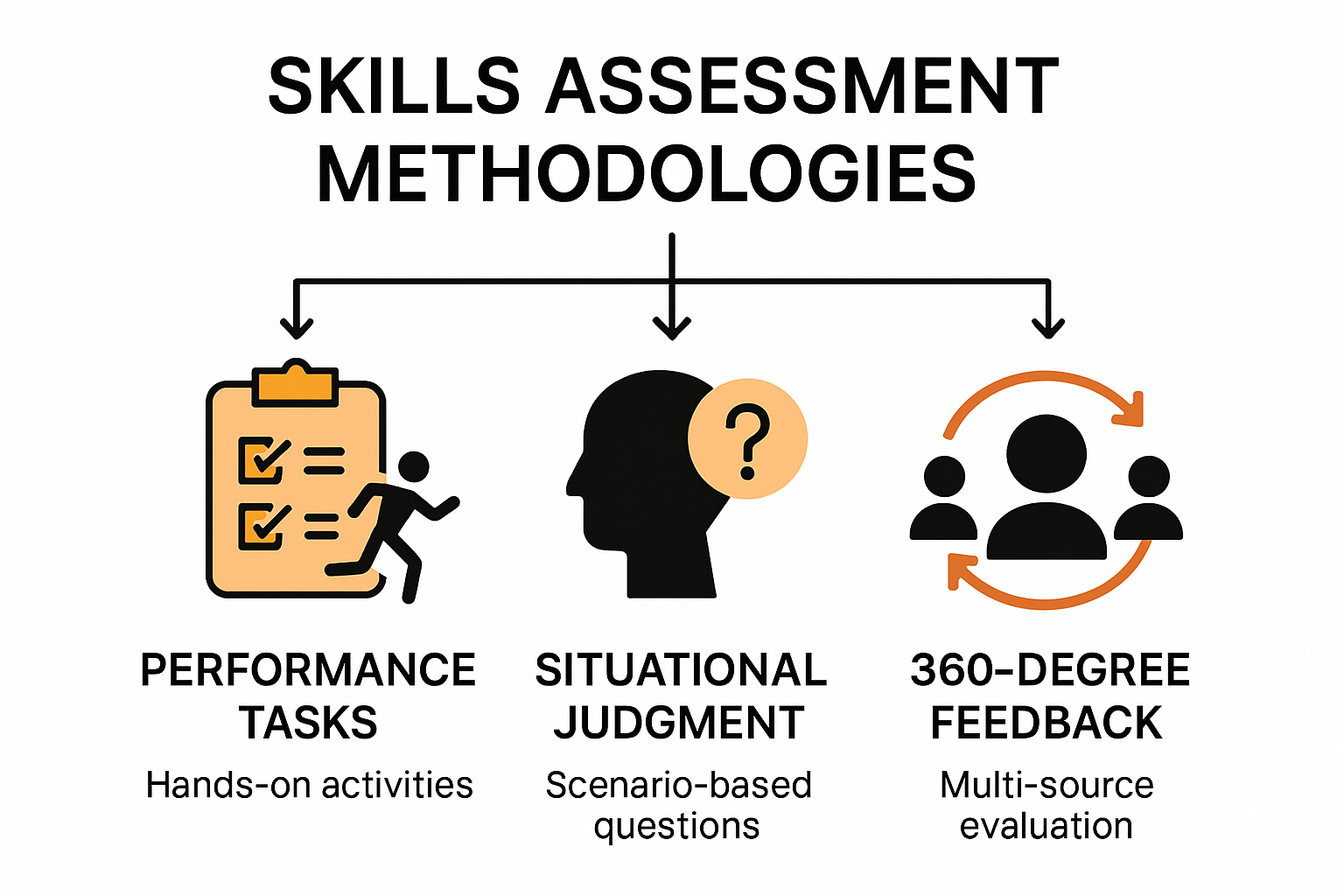
- Practical performance tasks: Real-world scenario-based challenges
- Situational judgment tests: Evaluating decision-making and problem-solving skills
- 360-degree feedback assessments: Gathering insights from multiple perspectives
- Skill simulation exercises: Creating immersive testing environments
Skill assessment platforms now offer unprecedented customization, allowing organizations to design role-specific assessments that accurately measure both technical proficiency and soft skills.
Advanced Testing Considerations
Implementing sophisticated skills testing requires careful consideration of several critical factors. Anti-cheating mechanisms, detailed analytics, and seamless integration with existing HR systems have become essential components of modern assessment strategies.
SkillRobo demonstrates how contemporary platforms address these challenges by offering:
- Robust identity verification protocols
- Comprehensive performance analytics
- Seamless integration with Applicant Tracking Systems (ATS)
- Customizable testing environments for diverse roles
The future of skills testing lies in creating adaptive, intelligent assessment ecosystems that provide nuanced insights into individual capabilities. By leveraging advanced technologies and comprehensive methodologies, organizations can develop more accurate, fair, and meaningful approaches to understanding and developing workforce skills.
Successful skills testing is no longer about simple pass/fail metrics, but about creating a dynamic understanding of individual potential and organizational capability.
Evaluate and Utilize Assessment Results
Transforming skills assessment data into actionable insights requires a strategic, systematic approach that goes beyond simple numerical scoring. Organizations must develop robust methodologies for interpreting, analyzing, and implementing findings to drive meaningful professional development and organizational growth.
Comprehensive Result Analysis
Effective assessment result evaluation demands a multi-dimensional perspective. Workforce development experts emphasize the critical importance of establishing clear, measurable criteria for skill proficiency, ensuring consistent and objective evaluation across different assessment dimensions.
Key analysis considerations include:
- Standardized proficiency benchmarks: Defining clear skill level standards
- Comparative performance metrics: Understanding individual and team capabilities
- Granular skill mapping: Identifying specific strengths and development areas
By implementing comprehensive analysis frameworks, organizations can transform raw assessment data into strategic intelligence that supports targeted talent development initiatives.
Strategic Talent Development Planning
According to the World Economic Forum’s Future of Jobs Report, systematically analyzing skills data is crucial for informed workforce planning. This means linking assessment results directly to strategic talent management strategies.
Recommended strategic approaches:
- Personalized learning pathways: Designing individual development plans based on assessment insights
- Targeted reskilling initiatives: Creating focused training programs addressing identified skill gaps
- Talent mobility planning: Identifying internal candidates for role transitions
Advanced HR analytics platforms recommend utilizing multiple assessment methods to create a holistic view of employee capabilities, including self-assessments, manager evaluations, 360-degree feedback, and practical skills tests.
Continuous Improvement and Adaptation
Successful skills assessment utilization requires an ongoing, dynamic approach. Organizations must view assessment results not as static endpoints, but as dynamic inputs for continuous organizational learning and development.
Key continuous improvement strategies include:
- Regular reassessment cycles: Implementing periodic skill evaluations
- Feedback integration: Incorporating employee perspectives into assessment design
- Technology-enabled tracking: Using advanced analytics to monitor skill progression
By creating a culture of continuous learning and adaptive skill development, organizations can transform skills assessments from isolated measurement events into powerful strategic tools for workforce optimization.
The ultimate goal of skills assessment is not merely to measure current capabilities, but to unlock potential, drive individual growth, and align workforce skills with evolving organizational needs. Effective result utilization bridges the gap between assessment data and transformative professional development.
Improve Your Assessment Process
Continuous improvement of skills assessment processes is essential for maintaining the relevance, accuracy, and effectiveness of talent evaluation strategies. Organizations must proactively evolve their assessment methodologies to address emerging challenges and leverage new technological capabilities.
Addressing Cognitive Biases in Assessment
Neuroscience research reveals that nearly 200 different cognitive biases can significantly impact workplace evaluations, potentially compromising the objectivity of traditional assessment approaches. Recognizing and mitigating these biases is crucial for creating fair, accurate skills assessment processes.
Strategies to minimize assessment bias include:
- Standardized evaluation criteria: Developing clear, objective measurement frameworks
- Diverse assessment panels: Incorporating multiple perspectives to reduce individual bias
- Blind evaluation techniques: Removing identifying information that might trigger unconscious prejudices
- Structured assessment protocols: Creating consistent evaluation methodologies
By systematically addressing cognitive biases, organizations can create more equitable and reliable skills assessment processes that truly reflect individual capabilities.
Leveraging Advanced Technologies
AI-powered assessment technologies offer unprecedented opportunities for more comprehensive and accurate talent evaluation. These advanced systems can simulate real-world tasks, providing deeper insights into an individual’s practical skills and job readiness.
Key technological improvements include:
- Machine learning algorithms: Developing more nuanced skill evaluation capabilities
- Adaptive testing platforms: Creating dynamic assessment experiences
- Performance simulation technologies: Generating realistic job scenario evaluations
- Real-time skills tracking: Monitoring skill development continuously
Organizations that embrace these technological advancements can transform their assessment processes from static measurements to dynamic, predictive talent intelligence systems.
Implementing a Holistic Skills Strategy
A truly effective skills assessment process extends far beyond simple talent acquisition. Skills-based approaches enable organizations to make more informed decisions about workforce development, succession planning, and strategic talent management.
Comprehensive skills strategy components:
- Continuous learning integration: Linking assessment results directly to development opportunities
- Skills portfolio management: Creating dynamic skill tracking and mapping
- Cross-functional skill visibility: Providing organization-wide insights into talent capabilities
- Predictive skills forecasting: Anticipating future organizational skill requirements
Successful skills assessment improvement requires a cultural shift towards viewing skills as dynamic, evolving capabilities rather than static attributes. Organizations must create flexible, adaptive systems that support continuous learning and development.
The most effective skills assessment processes are those that view evaluation not as a one-time event, but as an ongoing dialogue between individuals, their capabilities, and organizational needs. By embracing technological innovation, addressing cognitive biases, and adopting a holistic approach, organizations can transform their skills assessment processes into powerful strategic tools for talent optimization.
Frequently Asked Questions
What are the key components of an effective skills assessment framework?
An effective skills assessment framework should include clearly defined skill proficiency levels, multiple evaluation methods (like self-assessment and peer reviews), and standardized measurement criteria to ensure consistent evaluation across assessments.
How can technology improve skills assessments in 2025?
In 2025, technology enhances skills assessments through AI-powered tools, gamification, and adaptive testing platforms, which provide more accurate evaluations and engage employees in a dynamic testing environment.
What strategies can minimize bias in skills assessments?
To minimize bias, organizations should implement standardized evaluation criteria, involve diverse assessment panels, use blind evaluation techniques, and maintain structured assessment protocols to ensure fairness in skill evaluations.
How can organizations use skills assessment results for talent development?
Organizations can use skills assessment results to create personalized learning pathways, develop targeted reskilling initiatives, and facilitate talent mobility by identifying internal candidates for role transitions.
Elevate Your Skills Assessment Strategy Today!
In the rapidly evolving organizational landscape of 2025, merely conducting skills assessments isn’t enough. Organizations face a pressing challenge: how to ensure their evaluation processes are not only effective but also fair and insightful. As highlighted in our latest article, advancing technologies and tailored frameworks are vital to minimizing bias and unlocking employee potential. But are you equipped to handle these demands?

At Peuneo, we specialize in transforming your skills development and training strategy to meet modern expectations. Our accredited programs provide the necessary tools to develop fair and comprehensive assessments that align with industry standards and organizational goals. With our online learning portal, you can access tailored courses designed to bridge skill gaps and enhance your team’s effectiveness. Don’t wait—optimize your skills assessment process and foster continuous improvement. Visit us at peuneo.co.za and empower your workforce today!