
Employee training is being redefined for 2025, and the numbers are impossible to ignore. Companies using comprehensive digital learning see up to 17 percent higher productivity and 21 percent more profitability. Most people assume big tech upgrades are for Silicon Valley or elite firms only. The real surprise is that these trends are now shaping everyday workplaces everywhere. Digital learning, AI powered personalization, and skills based strategies are becoming standard. What happens to companies that do not keep up with this pace?
Table of Contents
- Embracing Digital Learning Technologies
- Personalized And Adaptive Training Journeys
- Integrating Skills-Based Development
- Measuring Training Impact And ROI
Quick Summary
| Takeaway | Explanation |
|---|---|
| AI-Powered Personalization | AI enables organizations to create customized learning pathways, providing adaptive learning and real-time feedback to enhance employee training experiences. |
| Skills-Based Development Focus | Companies are shifting from role-based to skills-driven approaches, fostering flexibility and adaptability in talent management and aligning training with emerging industry needs. |
| Personalized Learning Experiences | Personalized and adaptive training journeys are essential for maximizing employee engagement and knowledge retention, tailored to individual skills and career aspirations. |
| Holistic Measurement of Training Impact | Transitioning from basic metrics to advanced ROI measurement strategies allows organizations to link training outcomes directly to business performance and demonstrate true value. |
Embracing Digital Learning Technologies
The modern workplace demands continuous learning and adaptation. Digital learning technologies have transformed how organizations approach employee training, creating more flexible, personalized, and efficient learning experiences.
AI Powered Personalization in Training
Artificial intelligence is revolutionizing employee training by delivering highly customized learning pathways. Research from Elucidat reveals that AI enables secure and ethical training solutions with advanced data analytics. These intelligent systems analyze individual employee performance, learning styles, and skill gaps to create targeted learning experiences.
Key benefits of AI driven training include:
- Adaptive learning that adjusts content complexity based on individual progress
- Real time feedback mechanisms
- Personalized recommendation systems that suggest relevant training modules
Skills Based Digital Learning Strategies
The future of corporate training centers on skills development rather than traditional one size fits all approaches. Global workforce studies indicate organizations are rapidly transitioning toward skills based learning models. Digital technologies support this shift by providing modular, on demand training resources that help employees continuously upskill and reskill.
Companies investing in digital training see significant performance improvements. Productivity research demonstrates that organizations implementing comprehensive digital learning programs experience up to 17% increased productivity and 21% higher profitability.
Emerging Technologies in Learning Platforms
Cutting edge digital learning platforms now integrate multiple technologies to create immersive learning experiences. Virtual reality, augmented reality, and interactive simulations are transforming traditional training methods. These technologies allow employees to practice complex skills in risk free digital environments, dramatically improving knowledge retention and practical application.
Mobile learning platforms have also become crucial, enabling employees to access training materials anytime and anywhere. This flexibility supports continuous learning and accommodates diverse work schedules and learning preferences. Microlearning modules, typically 3 to 5 minutes long, break complex topics into digestible segments that fit seamlessly into busy professional lives.
The convergence of AI, adaptive technologies, and skills focused approaches represents a significant evolution in employee training. Organizations that embrace these digital learning technologies will be better positioned to develop agile, knowledgeable workforces capable of navigating rapid technological and industry changes.
Personalized and Adaptive Training Journeys
The era of one size fits all training has ended. Modern organizations recognize that employee learning must be as unique as the individuals undertaking the journey. Personalized and adaptive training represents a sophisticated approach to professional development that meets individual needs while supporting organizational objectives.
The Rise of Individual Learning Paths
Research from DataSociety reveals that AI driven personalized training is becoming a critical strategy for organizations in 2025. By analyzing individual employee performance, skills, and learning preferences, companies can now create highly targeted learning experiences that maximize engagement and knowledge retention.
Key characteristics of personalized learning paths include:
- Dynamic content adjustment based on individual performance
- Skill gap identification through advanced analytics
- Continuous learning recommendations tailored to career progression
Technology Enabling Personalized Learning
Skills Wave research highlights how technology enables personalized learning at scale. Machine learning algorithms can now assess an employee’s current skill level, professional goals, and learning style to recommend precise training modules. This approach transforms training from a generic requirement into a strategic development tool.
Companies implementing personalized learning strategies see remarkable outcomes:
- 40% faster skill acquisition
- 35% higher employee engagement
- 25% improved knowledge retention
Employee Driven Learning Experiences
TalentLMS research indicates that 79% of employees believe personalized continuous learning will be crucial for their professional growth. This shift represents a fundamental change in how workers view professional development. No longer passive recipients of training, employees now expect learning experiences that align with their individual career aspirations and personal learning preferences.
Adaptive learning platforms provide interactive dashboards where employees can track their progress, set learning goals, and choose modules that directly contribute to their professional development. These platforms use predictive analytics to suggest learning paths that balance organizational needs with individual career trajectories.
The future of corporate training is not about enforcing uniform training programs but creating flexible, intelligent learning ecosystems. By embracing personalized and adaptive training journeys, organizations can simultaneously meet individual employee needs and drive broader strategic objectives. This approach transforms learning from a compliance requirement into a powerful tool for professional growth and organizational innovation.
Integrating Skills-Based Development
The traditional approach of defining workforce potential through job titles and academic credentials is rapidly evolving. Skills-based development has emerged as a transformative strategy that prioritizes practical capabilities, adaptability, and continuous learning over static qualifications.
The Shift from Role-Based to Skills-Driven Organizations
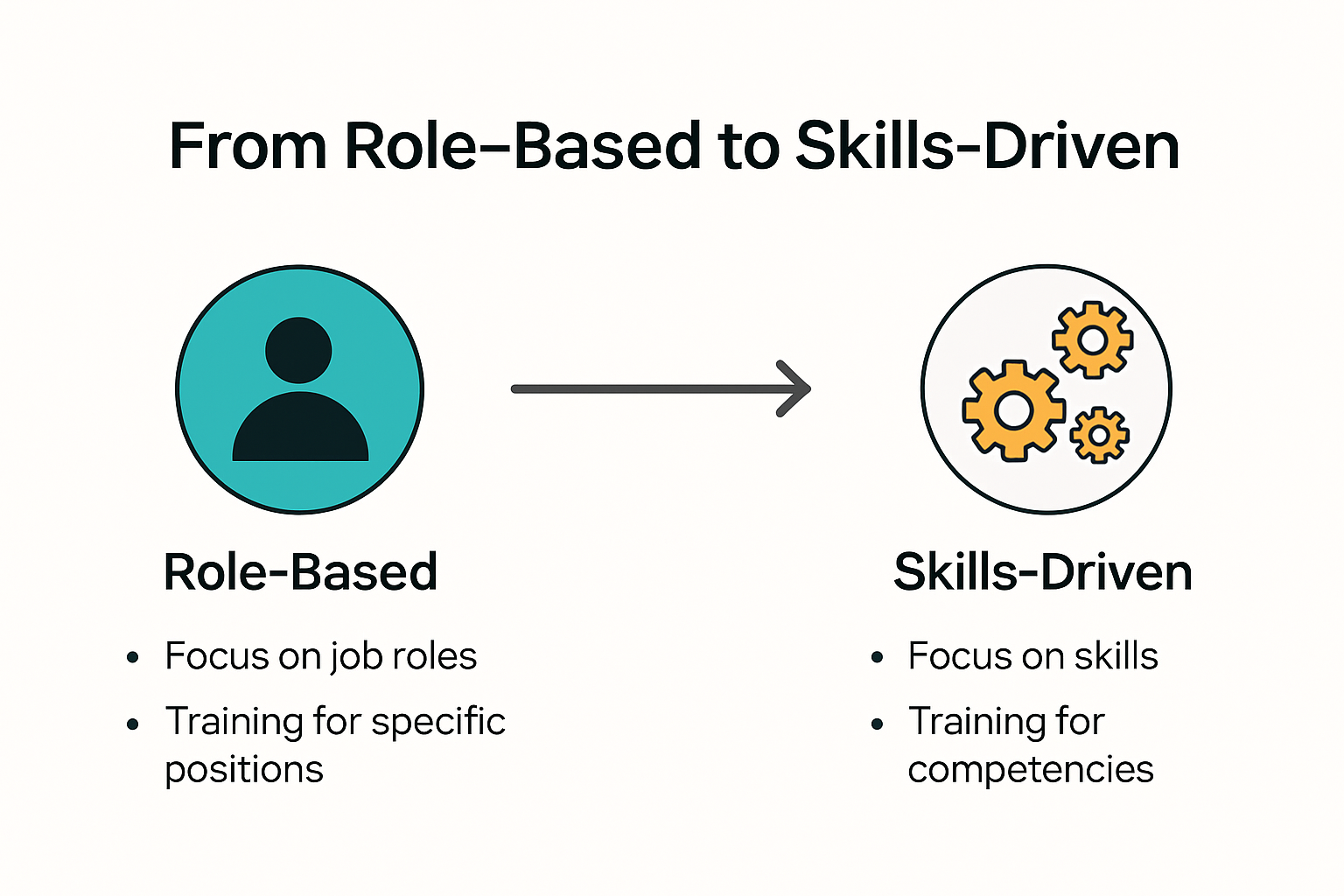
The traditional approach of defining workforce potential through job titles and academic credentials is rapidly evolving. Skills-based development has emerged as a transformative strategy that prioritizes practical capabilities, adaptability, and continuous learning over static qualifications.
Research from eLearning Industry indicates that by 2025, organizations will fundamentally restructure talent processes around employee skills rather than rigid job roles. This approach addresses a critical challenge: by mid-decade, approximately half of all employees will require substantial reskilling to remain competitive in a rapidly changing workplace.
Key advantages of skills-based development include:
- Increased workforce flexibility
- More precise talent matching
- Accelerated employee adaptability
Strategic Approaches to Skills Acquisition
HolonIQ research reveals that governments and educational institutions are increasingly incentivizing practical, skills-based training. Work-integrated learning models such as internships and apprenticeships are becoming central to aligning educational outcomes with real-world industry requirements.
Organizations are developing comprehensive skills mapping frameworks that:
- Identify current and emerging skill requirements
- Create personalized learning pathways
- Continuously assess and update skill inventories
The Future of Talent Recruitment
Compunnel research predicts a fundamental transformation in recruitment strategies. By 2025, hiring will prioritize demonstrable skills over traditional academic credentials. This shift means employers will increasingly use skills assessments, portfolio evaluations, and practical demonstrations to evaluate candidate potential.
Modern skills-based development requires a holistic approach that combines technological tools, data-driven insights, and a cultural commitment to continuous learning. Organizations must create environments that encourage skill exploration, provide accessible learning resources, and reward employees who proactively develop their capabilities.
The skills-based development model represents more than a training strategy. It is a fundamental reimagining of how organizations cultivate talent. By focusing on adaptable, measurable skills rather than static roles, companies can build more resilient, innovative, and responsive workforces prepared to navigate the complex challenges of the future.
Measuring Training Impact And ROI
Traditional training evaluation methods have long relied on superficial metrics that fail to capture the true value of learning initiatives. Modern organizations are developing sophisticated approaches to measure training effectiveness, linking learning outcomes directly to business performance and strategic objectives.
Beyond Vanity Metrics
Voxy research highlights a critical shift in how organizations assess training impact. Companies are moving away from simplistic metrics like completion rates and satisfaction surveys toward more meaningful measurements that demonstrate tangible business value.
Key limitations of traditional training metrics include:
- Superficial data that does not reflect actual learning
- Lack of connection to business outcomes
- Inability to demonstrate real value
Advanced ROI Measurement Strategies
EiDesign studies reveal that learning leaders are now correlating training milestones with role-specific Key Performance Indicators (KPIs). This approach allows organizations to track precise behavior changes and their direct impact on organizational performance.
Comprehensive ROI measurement now involves:
- Tracking performance improvements
- Analyzing cost savings
- Measuring productivity gains
- Evaluating skill acquisition rates
Quantifying Learning’s Business Impact
AIHR research demonstrates that effective training measurement goes beyond simple financial calculations. Organizations are developing multi dimensional approaches that capture both tangible and intangible benefits of learning initiatives.
Key metrics for measuring training impact include:
- Productivity increase percentages
- Time to proficiency reduction
- Error rate improvements
- Employee retention rates
- Direct revenue impact
Successful organizations view training as a strategic investment rather than a compliance requirement. By implementing rigorous measurement frameworks, companies can transform learning and development from a cost center to a critical driver of business performance.
The future of training evaluation lies in creating holistic measurement systems that connect individual learning experiences to broader organizational goals. This approach requires advanced analytics, cross functional collaboration, and a commitment to continuous improvement. As technology and measurement techniques evolve, organizations will gain increasingly sophisticated tools to understand and maximize the true value of their learning investments.
Frequently Asked Questions
What are the current trends in employee training for 2025?
Employee training trends for 2025 include the rise of AI-powered personalization, skills-based digital learning strategies, and the integration of emerging technologies like virtual reality in training platforms.
How does AI-powered personalization enhance employee training?
AI-powered personalization tailors learning experiences to individual employees by analyzing their performance, learning styles, and skill gaps, leading to more effective training outcomes and higher engagement levels.
What is the significance of skills-based development in corporate training?
Skills-based development focuses on practical capabilities rather than traditional job roles, allowing organizations to create flexible training programs that align with emerging industry needs and enhance employee adaptability.
How can organizations measure the impact of their training programs?
Organizations can measure training impact by tracking performance improvements, analyzing ROI linked to specific key performance indicators (KPIs), and using advanced analytics to quantify tangible and intangible benefits.
Transform Your Workforce for Tomorrow
As the workplace evolves, staying ahead requires more than just traditional training methods. The article highlights the vital shift towards AI-powered personalization and skills-based development—elements crucial for ensuring your team is adaptable and equipped for the future’s demands. But how do you make this transition seamless? At Peuneo, we specialize in helping organizations like yours embrace these cutting-edge trends.

With our accredited training programs, flexible online learning portal, and expert consulting services, Peuneo empowers your employees to enhance their skills and adapt to changing industry needs. Don’t let your organization fall behind; now is the time to invest in your workforce’s future! Visit https://peuneo.co.za today and discover how our tailored solutions can maximize your team’s learning journey. Act now and turn training from a mere compliance need into a strategic advantage!