

Business process optimization is more than a buzzword for modern organizations chasing efficiency. Companies using advanced analytics and automation can experience cost savings of over $1.2 million annually and boost resource utilization by 18 percent. Most leaders pour energy into new software or big projects expecting instant results but the real transformation often comes from simple tweaks to existing workflows. Small steps can lead to big wins in ways that surprise even the experts.
Table of Contents
- Understanding Business Process Optimization Basics
- Key Steps to Optimize Business Processes Effectively
- Best Tools and Technologies for Process Optimization
- Real-World Applications Across Organizations
Quick Summary
| Takeaway | Explanation |
|---|---|
| Prioritize comprehensive process mapping. | Detailed mapping helps identify inefficiencies and create better workflows. |
| Embrace data-driven decision-making. | Leverage metrics and analytics to guide process improvements effectively. |
| Integrate technology for automation. | Tools like RPA and AI streamline processes, reducing manual errors and enhancing efficiency. |
| Focus on continuous improvement practices. | Optimization should be an ongoing effort rather than a one-time initiative for lasting success. |
| Cultivate a culture of adaptability. | Organizations must be open to learning and technological advances to maintain competitiveness and resilience. |
Understanding Business Process Optimization Basics
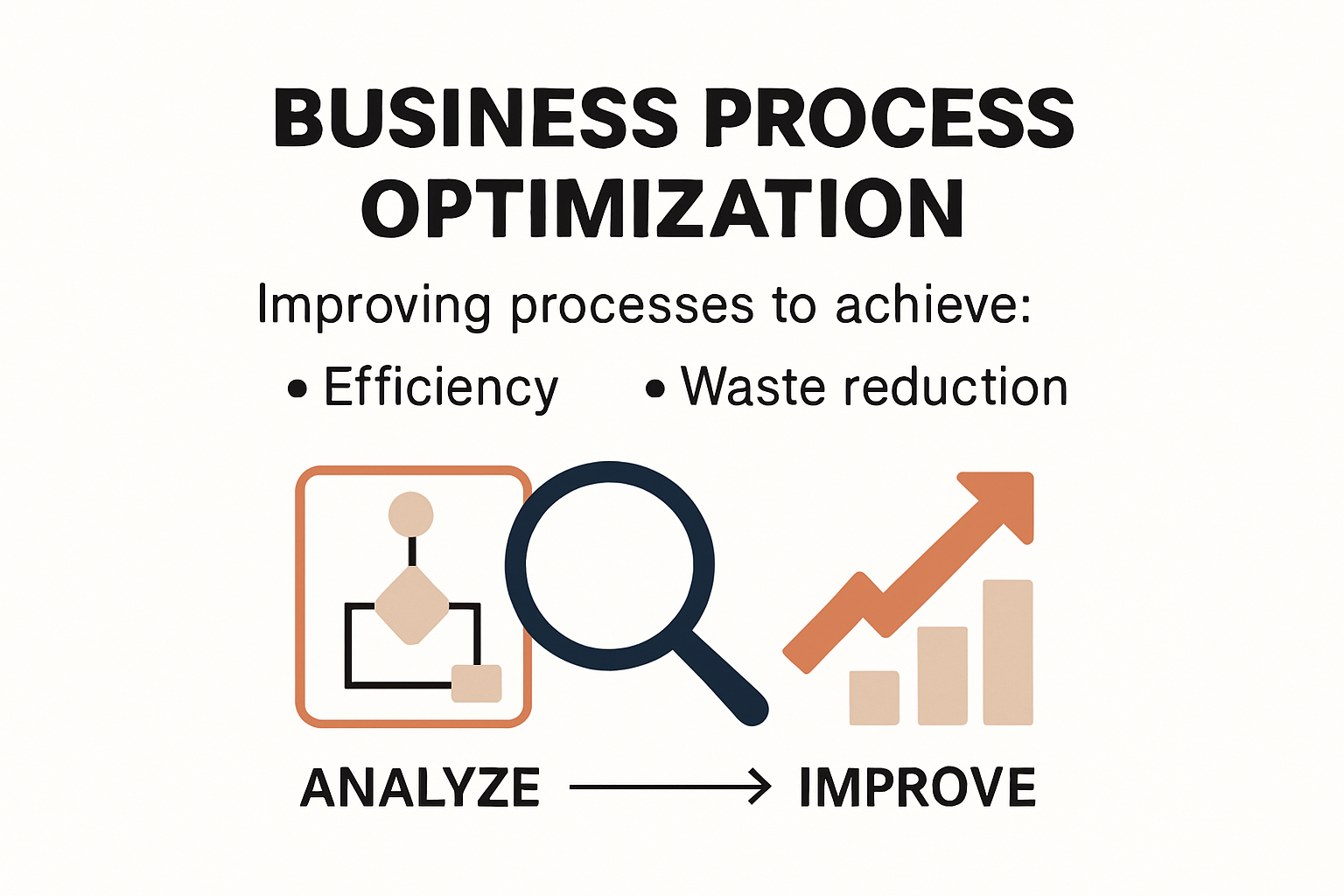
Business process optimization represents a strategic approach to improving organizational performance by systematically analyzing and enhancing existing workflows. At its core, this methodology focuses on identifying inefficiencies, reducing waste, and creating more streamlined operational systems that drive productivity and competitive advantage.
The Fundamental Principles of Process Optimization
Process optimization goes beyond simple incremental improvements. It requires a comprehensive understanding of how different organizational components interact and function. Harvard Business Review suggests that successful optimization involves a holistic view of organizational processes, examining not just individual tasks but the entire ecosystem of work.
Key principles include:
- Systematic Analysis: Carefully mapping out current processes and identifying potential bottlenecks
- Data Driven Decisions: Using quantitative metrics to guide improvement strategies
- Continuous Improvement: Recognizing optimization as an ongoing rather than one time effort
Technology and Process Optimization
Modern business process optimization increasingly relies on advanced technological solutions. Gartner Research indicates that artificial intelligence and machine learning are transforming how organizations approach workflow enhancement. These technologies enable real time process monitoring, predictive analytics, and automated performance tracking.
Technological tools help organizations:
- Visualize Complex Workflows: Create detailed process maps and diagrams
- Identify Performance Gaps: Use advanced analytics to detect inefficiencies
- Implement Automated Solutions: Reduce manual intervention and human error
By understanding these fundamental principles, businesses can develop robust strategies that transform their operational capabilities. Process optimization is not just about working harder but working smarter, leveraging technology and strategic thinking to create more efficient, responsive organizational systems.
The journey of business process optimization requires commitment, analytical thinking, and a willingness to challenge existing methodologies. Organizations that embrace this approach position themselves for greater agility, reduced operational costs, and enhanced competitive performance in an increasingly complex business environment.
Key Steps to Optimize Business Processes Effectively
Optimizing business processes requires a strategic and systematic approach that transforms organizational workflows into more efficient, productive systems. Successful optimization is not a one time event but a continuous journey of improvement and adaptation.
Comprehensive Process Mapping and Analysis
The first critical step in business process optimization involves detailed process mapping. TechTarget recommends creating comprehensive visual representations of existing workflows to identify potential bottlenecks and inefficiencies. This means documenting every step, interaction, and decision point within a specific business process.
Key elements of effective process mapping include:
- Detailed Documentation: Capturing each workflow stage with precision
- Cross Functional Collaboration: Involving team members from different departments
- Current State Assessment: Understanding how processes currently operate

Performance Metrics and Strategic Redesign
After mapping processes, organizations must establish clear performance metrics and develop strategic redesign plans. Wikipedia highlights that successful Business Process Re-engineering focuses on fundamental rethinking of organizational workflows to achieve dramatic improvements in critical performance measures.
Effective performance metric strategies involve:
- Quantifiable Goals: Setting specific, measurable objectives
- Data Driven Decision Making: Using analytics to guide optimization efforts
- Continuous Improvement Framework: Creating mechanisms for ongoing process evaluation
Technology and Automation Integration
Modern business process optimization increasingly relies on technological solutions that enable automation and intelligent workflow management. EO Johnson emphasizes the importance of implementing technologies that can streamline complex processes and reduce manual intervention.
Technology integration strategies include:
- Workflow Automation Tools: Implementing software that reduces manual tasks
- Artificial Intelligence: Leveraging machine learning for predictive process optimization
- Real Time Performance Monitoring: Using advanced analytics platforms
Successful business process optimization requires a holistic approach that combines strategic thinking, technological innovation, and a commitment to continuous improvement. Organizations that master these steps can transform their operational capabilities, reduce costs, and create more agile and responsive business models.
The journey of process optimization is ongoing. By maintaining a flexible mindset and embracing technological advancements, businesses can stay ahead of competitive challenges and create more efficient organizational ecosystems.
Best Tools and Technologies for Process Optimization
Modern business process optimization relies heavily on sophisticated technological solutions that transform traditional workflows into intelligent, data driven systems. As organizations seek to enhance efficiency and competitiveness, selecting the right tools becomes critical for successful process improvement.
Process Mapping and Visualization Technologies
Advanced process mapping technologies enable organizations to create comprehensive visual representations of complex workflows. Microsoft Visio and Lucidchart provide powerful diagramming capabilities that allow businesses to document, analyze, and redesign processes with unprecedented clarity.
Key features of process mapping tools include:
- Collaborative Design: Real time editing and sharing capabilities
- Integrated Analytics: Built in performance measurement features
- Cross Platform Compatibility: Seamless integration with existing organizational systems
Below is a summary table outlining different categories of process optimization technologies and their main features mentioned in this section.
| Technology Category | Example Tools/Technologies | Main Features / Benefits |
|---|---|---|
| Process Mapping | Microsoft Visio, Lucidchart | Visual workflow diagrams, collaboration, analytics |
| Workflow Automation | RPA, BPM Software, AI Workflow Tools | Automates tasks, workflow management, intelligent adaptation |
| Analytics/Monitoring | Machine Learning, Dashboards | Predictive analytics, real-time tracking, reporting |
Workflow Automation and Management Platforms
Workflow automation technologies represent a transformative approach to process optimization. U.S. Government Accountability Office highlights the significant potential of automation tools in enhancing organizational efficiency and reducing manual intervention.
Critical automation technologies include:
- Robotic Process Automation (RPA): Software robots that handle repetitive tasks
- Business Process Management (BPM) Software: Comprehensive platforms for process design and monitoring
- AI Powered Workflow Tools: Intelligent systems that learn and adapt to organizational needs
Advanced Analytics and Performance Monitoring Solutions
Data analytics technologies provide organizations with deep insights into process performance and potential optimization opportunities. Modern tools go beyond simple reporting, offering predictive and prescriptive analytics that guide strategic decision making.
Advanced analytics capabilities include:
- Machine Learning Algorithms: Predictive performance modeling
- Real Time Performance Dashboards: Instant visualization of key metrics
- Integrated Reporting Systems: Comprehensive performance tracking across multiple dimensions
Successful process optimization requires a strategic approach to technology selection. Organizations must carefully evaluate tools based on their specific operational requirements, integration capabilities, and long term scalability.
The rapid evolution of technological solutions demands continuous learning and adaptation. Businesses that remain agile and open to emerging technologies will be best positioned to leverage process optimization tools effectively, driving innovation and maintaining competitive advantage in an increasingly complex business environment.
Real-World Applications Across Organizations
Business process optimization transcends theoretical concepts, delivering tangible results across diverse organizational contexts. By implementing strategic optimization approaches, companies can transform operational challenges into opportunities for significant performance enhancement.
Supply Chain and Resource Management Optimization
Bentley University research demonstrates the profound impact of data driven process optimization in global product management. A comprehensive framework implemented within a multinational organization resulted in remarkable outcomes, including 18% improved resource utilization and annual cost savings exceeding $1.2 million.
Key strategies in supply chain optimization include:
- Predictive Resource Allocation: Using advanced analytics to forecast and manage resource requirements
- Dynamic Inventory Management: Real time tracking and intelligent stock optimization
- Integrated Logistics Planning: Seamless coordination across different operational segments
The table below summarizes real-world business process optimization outcomes and the associated strategies referenced in the section.
| Organization Type | Optimization Outcome | Key Strategy Used |
|---|---|---|
| Multinational Corporation | 18% increase in resource utilization | Predictive Analytics, Resource Allocation |
| Multinational Corporation | $1.2 million in annual cost savings | Data-driven Optimization Framework |
Machine Learning in Process Transformation
Machine learning technologies are revolutionizing business process management by introducing unprecedented levels of intelligence and adaptability. Research by Weinzierl et al. highlights critical applications such as decision support predictions, process model discovery, and sophisticated resource allocation strategies.
Machine learning optimization approaches encompass:
- Automated Decision Support: Generating insights through predictive modeling
- Process Model Discovery: Identifying optimal workflow configurations
- Intelligent Resource Deployment: Dynamic allocation based on complex algorithmic assessments
Performance Optimization Through Advanced Learning Techniques
Cutting edge research explores innovative approaches to process optimization. Żbikowski et al. introduce deep reinforcement learning techniques that significantly outperform traditional resource allocation methods, demonstrating the potential for transformative organizational improvements.
Advanced learning optimization strategies include:
- Adaptive Process Modeling: Systems that learn and evolve based on operational data
- Performance Prediction: Anticipating potential bottlenecks and inefficiencies
- Continuous Improvement Mechanisms: Self adjusting optimization protocols
Successful process optimization requires more than technological implementation. Organizations must cultivate a culture of continuous learning, technological adaptability, and strategic thinking. By embracing data driven approaches and advanced learning technologies, businesses can create resilient, efficient operational ecosystems that respond dynamically to complex market challenges.
The future of business process optimization lies in the seamless integration of human expertise and intelligent technological solutions. Companies that master this balance will not only survive but thrive in an increasingly competitive and rapidly changing global business environment.
Frequently Asked Questions
What is business process optimization?
Business process optimization is a strategic approach to improving an organization’s performance by systematically analyzing and enhancing existing workflows to identify inefficiencies, reduce waste, and create streamlined operational systems that drive productivity.
How can technology help in business process optimization?
Technology plays a crucial role in business process optimization by enabling advanced analytics, automation, and real-time monitoring, which helps organizations to visualize workflows, detect inefficiencies, and implement automated solutions to enhance efficiency and reduce manual errors.
What are the key steps to effectively optimize business processes?
The key steps to effectively optimize business processes include comprehensive process mapping and analysis, establishing performance metrics, strategic redesign of workflows, and integrating technology and automation to streamline operations and continuously improve performance.
What tools are best for business process optimization?
The best tools for business process optimization include process mapping and visualization technologies like Microsoft Visio and Lucidchart, workflow automation platforms such as RPA and BPM software, and advanced analytics solutions that offer predictive and prescriptive insights for informed decision-making.
Ready to Turn Optimization Insights Into Real Business Results?
If you find yourself facing slow processes, wasted resources, and uncertainty about how to implement real change, you are not alone. As highlighted in the article, true transformation requires more than quick fixes—it calls for a deep understanding of process mapping, analytics, and ongoing improvement. Many South African organizations struggle to convert these strategies into lasting impact. Peuneo (Pty) Ltd bridges the gap by offering fully accredited training and consulting services that address your unique operational challenges. Our solutions align directly with the key themes from the article: data-driven decision-making, technology-powered automation, and continuous development of your workforce.

Make your next step count. Visit Peuneo’s online platform today to explore bespoke business courses, process optimization consulting, and practical compliance solutions designed for competitive organizations. Elevate your team’s efficiency and ensure your business thrives in 2025 and beyond.